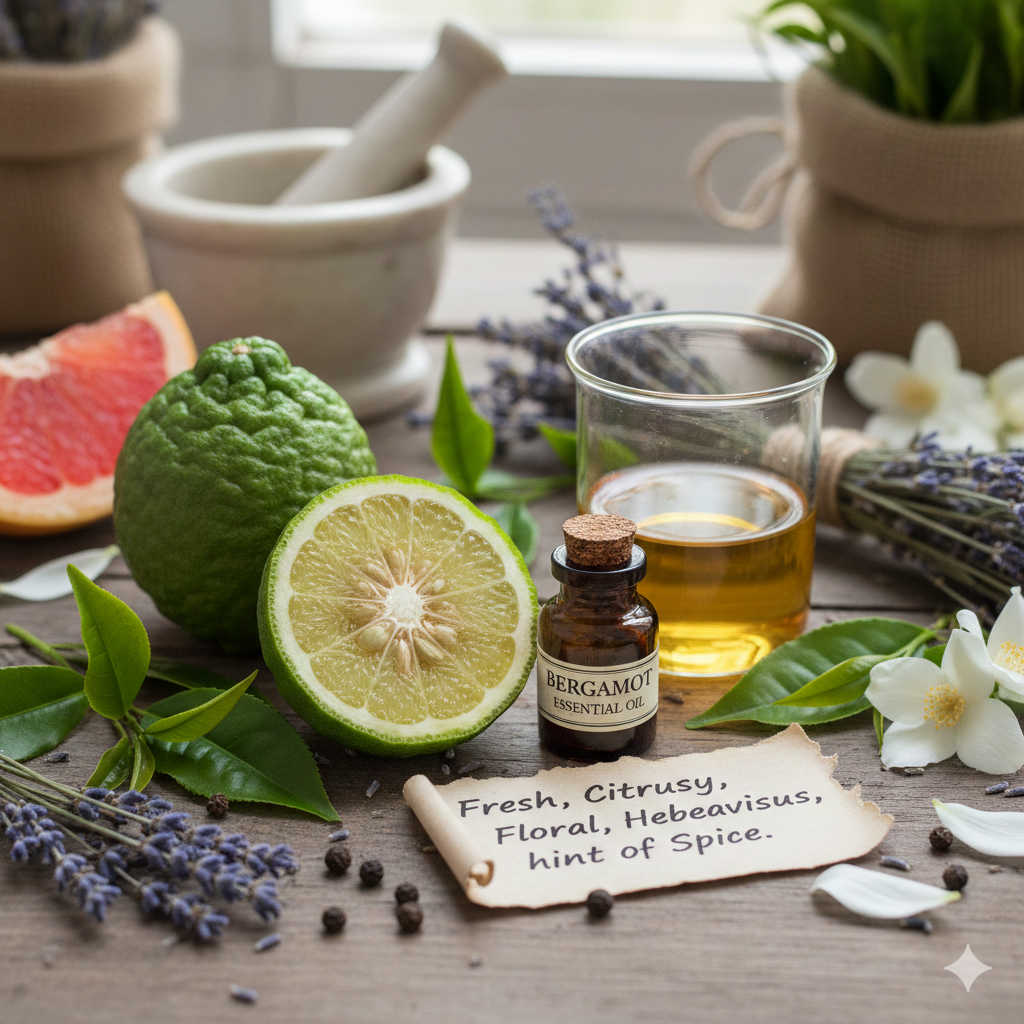
You’ve probably encountered bergamot without realizing it. It appears in fragrances, teas, candles, and skincare products, yet many people struggle to describe its scent when asked directly. Is it lemon-like? Orange-like? Floral? Sweet? Bitter?
The truth is that bergamot doesn’t fit neatly into a single category. Its aroma is layered and distinctive, which is exactly why it’s so valued in perfumery and flavoring. If you’re curious about what bergamot smells like — whether for personal interest, fragrance shopping, or writing — this guide breaks it down in practical, sensory terms you can actually visualize.
By the end, you’ll know how to recognize it, compare it with other citrus scents, and understand why it’s used so widely.
Understanding Bergamot Before Smelling It
Bergamot comes from a citrus fruit whose peel contains highly aromatic oils. These oils are extracted and used in perfumes, tea flavoring, and wellness products. Unlike oranges or lemons, the fruit itself isn’t typically eaten fresh. Its reputation comes from its fragrance rather than its flavor as a standalone food.
Because bergamot oil is rich in aromatic compounds, its scent unfolds in stages rather than presenting a flat, one-dimensional smell. That complexity makes it easier to identify once you know what to notice.
The Short Answer: What Bergamot Smells Like
If you want a quick sensory snapshot:
Bergamot smells fresh, citrusy, slightly sweet, mildly bitter, and lightly floral — all at once. It’s bright and uplifting without being sharp, and it feels smoother and more refined than most citrus scents.
Think of it as the polished cousin of lemon: lively and clean, but softer and more sophisticated.
Breaking Down the Scent in Detail
Bright Citrus Sparkle
The first impression most people notice is freshness. Bergamot delivers a burst of citrus brightness similar to freshly grated peel. It feels lively and energizing — the type of scent that instantly wakes up your senses.
Unlike lemon, though, it rarely smells sour or piercing. The citrus aspect’ is smoother and more rounded, which makes it pleasant even to those who don’t usually enjoy sharp citrus fragrances.
What readers should notice when smelling:
- Clean, crisp opening
- Light and airy character
- Refreshing without stinging the nose
This top-layer brightness is why bergamot is frequently used at the beginning of fragrance compositions.
Soft Natural Sweetness
Underneath that citrus clarity is a gentle sweetness. It’s not sugary or dessert-like. Instead, it resembles the subtle sweetness you get when peeling a ripe orange.
This softness prevents bergamot from feeling harsh or overly tart. It gives the scent warmth and accessibility, making it appealing to a wide range of people.
You might perceive:
- A mellow, rounded edge
- Comforting familiarity
- A hint of juicy citrus peel
This sweetness is subtle enough that some people only notice it after paying attention.
Slight Pleasant Bitterness
One defining feature of bergamot is its delicate bitter undertone. This is not unpleasant — it’s what adds depth and sophistication.
Imagine:
- The pith of citrus peel
- Aromatic tea leaves
- A gentle herbal edge
This bitterness keeps bergamot from smelling overly sweet or simplistic. In fragrance design, it helps anchor lighter notes and adds structure.
Readers trying to identify bergamot should look for that faint dry bite that distinguishes it from basic citrus scents.
Faint Floral Nuances
As the scent settles, many people detect light floral hints. These aren’t strong enough to classify bergamot as a floral scent, but they add elegance.
These undertones contribute:
- Smoothness
- Refinement
- A perfumed quality
They’re one reason bergamot blends seamlessly with floral fragrances and why it rarely smells harsh or overly sharp.
Clean and Polished Finish
The lasting impression bergamot leaves is clarity. It fades gently, maintaining freshness without heaviness.
This quality explains why it’s associated with:
- Clean environments
- Relaxing atmospheres
- Uplifting moods
It’s a scent that feels finished and balanced rather than loud or overwhelming.
How Bergamot Compares to Familiar Citrus Scents
Understanding differences helps sharpen recognition:
- Lemon — sharper, more acidic, more intense
- Orange — sweeter and juicier
- Grapefruit — tangier and more bitter
- Lime — zestier and greener
Bergamot sits between these profiles. It combines brightness, softness, and aromatic complexity, making it more layered than most citrus oils.
Where You’re Most Likely to Smell Bergamot
Tea
Many people unknowingly experience bergamot through flavored black tea blends. The oil adds a fragrant citrus aroma with subtle floral warmth that enhances the drinking experience.
Perfumes and Colognes
Bergamot is extremely common in fragrances because it creates an inviting opening. It pairs well with woody, spicy, and floral notes, making it a versatile ingredient.
Skincare and Body Products
Lotions, soaps, and shampoos use bergamot for its clean yet comforting scent. It signals freshness while maintaining sophistication.
Home Fragrance
Candles and diffusers often feature bergamot to create uplifting atmospheres without overwhelming a space.
Emotional and Sensory Associations
Smell perception is personal, but bergamot often triggers similar reactions:
- Feeling refreshed or mentally reset
- Calm positivity
- Lightness and clarity
- Comfort and familiarity
These associations contribute to its popularity in relaxation-focused environments.
Tips for Identifying Bergamot in Real Life
If you want to train your nose, try this:
- Smell citrus peels and notice their differences
- Compare bergamot-based tea aroma before brewing
- Sample fragrances listing bergamot as a top note
- Focus on detecting bitterness beneath freshness
Developing scent awareness takes repetition, but bergamot becomes easier to recognize with practice.
Factors That Affect How Bergamot Smells
Product Quality
High-grade oils smell smoother and more nuanced, while lower-quality versions may feel flat or overly sharp.
Blending Ingredients
Bergamot changes depending on what surrounds it:
- With florals — softer and sweeter
- With woods — brighter and fresher
- With spices — warmer and richer
Personal Perception
Memory, genetics, and past exposure shape how individuals interpret scents. Two people may describe the same bergamot aroma differently.
Common Reader Questions
Is bergamot strong?
Typically no. It’s noticeable but not overpowering, especially compared to heavy floral or musky scents.
Does bergamot smell like orange?
Only partially. It shares sweetness but has more bitterness and aromatic depth.
Why is it so common in fragrance?
Because it enhances openings, balances compositions, and appeals broadly to consumers.
Practical Reasons People Seek Bergamot Scent
Readers often explore bergamot because they want:
- Fresh daily-wear fragrances
- Relaxing home environments
- Aromatic tea experiences
- Sophisticated citrus notes
Understanding its scent helps them choose products more confidently.
Final Perspective
Bergamot’s aroma is best described as a harmonious blend of citrus brightness, gentle sweetness, light bitterness, and subtle floral elegance. It’s uplifting without sharpness, comforting without heaviness, and complex without confusion.
This balance is what makes bergamot so widely appreciated. It bridges freshness and sophistication in a way few natural aromas manage.
If you imagine the smooth zest of citrus peel warmed by sunlight, softened by delicate florals, and grounded by a whisper of bitterness, you’ll have a reliable mental picture of what bergamot smells like.
And once you recognize it, you’ll start noticing it everywhere — in fragrance counters, kitchen cupboards, and everyday personal care products.