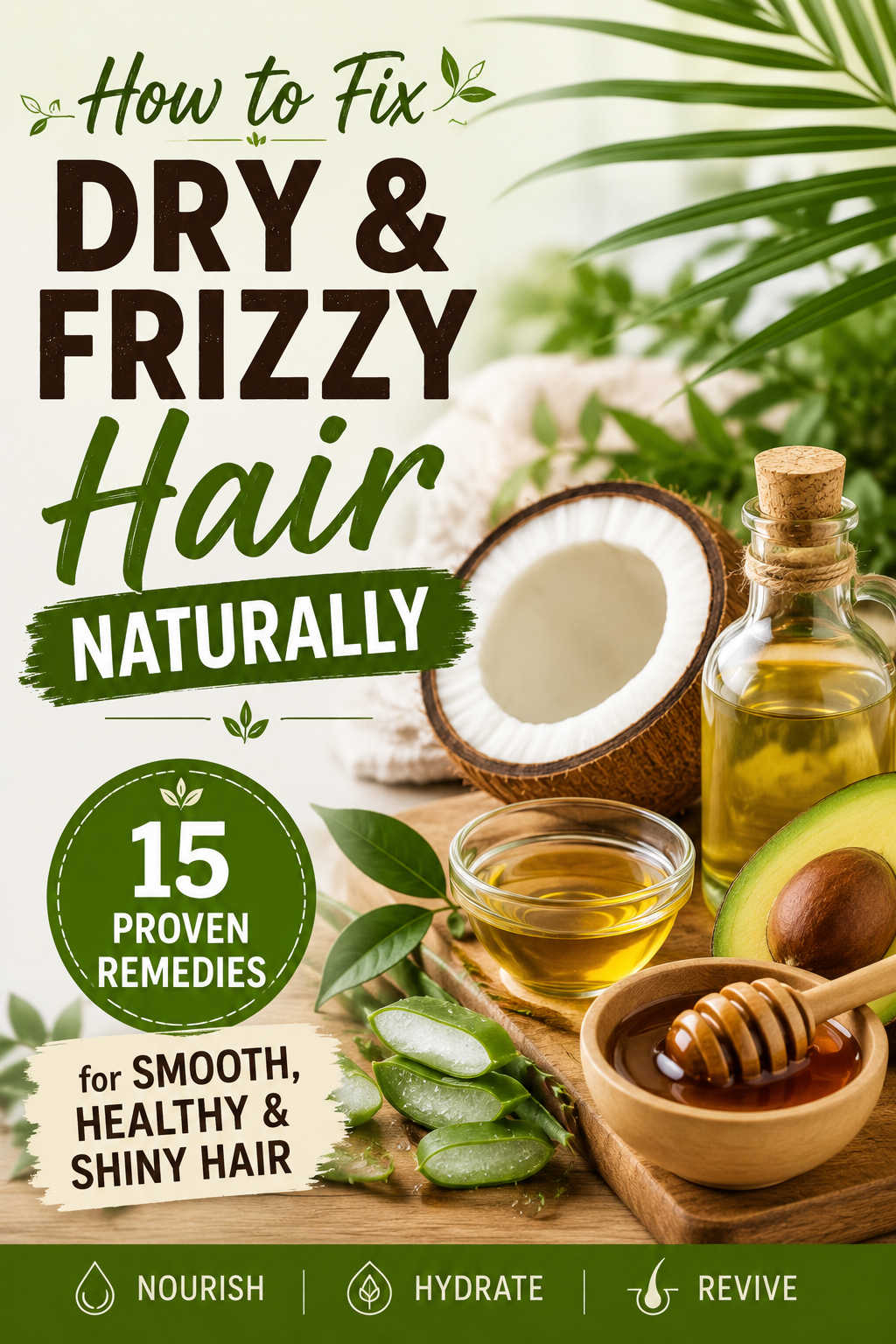
Few hair problems are as frustrating as dryness and frizz. One day your hair feels soft and manageable, and the next it becomes rough, tangled, dull, and difficult to style. Whether you have straight, wavy, curly, or coily hair, dry and frizzy strands can affect anyone.
Many people spend hundreds of dollars on salon treatments, serums, and masks hoping to achieve smooth and shiny hair. While some products provide temporary results, they often fail to address the root cause of the problem. In many cases, natural solutions combined with proper hair care habits can restore moisture and improve hair texture more effectively over time.
The good news is that healthy hair is achievable without harsh chemicals or expensive treatments. By understanding what causes hair dryness and learning how to nourish your hair naturally, you can dramatically improve its appearance and strength.
This comprehensive guide covers everything you need to know about fixing dry and frizzy hair naturally, including the causes, best home remedies, natural oils, daily hair care practices, dietary recommendations, and common mistakes to avoid.
What Causes Dry and Frizzy Hair?
Before treating frizz, it helps to understand why it occurs.
Healthy hair is protected by a smooth outer layer called the cuticle. When the cuticle lies flat, hair retains moisture and reflects light, creating a shiny appearance. When the cuticle becomes damaged or raised, moisture escapes from the hair shaft, leading to dryness and frizz.
Several factors can contribute to this problem.
Frequent Heat Styling
Hair dryers, flat irons, and curling wands expose hair to high temperatures that weaken its protective structure. Over time, excessive heat removes moisture and increases breakage.
Overwashing Your Hair
Washing your hair too often strips away natural oils produced by the scalp. These oils are essential for maintaining softness and hydration.
Chemical Treatments
Hair coloring, bleaching, relaxing, rebonding, and perming can significantly damage the hair cuticle and cause chronic dryness.
Weather Conditions
Strong sunlight, wind, dry air, and humidity can all affect hair moisture levels. Humidity is particularly problematic because it causes hair strands to swell and become frizzy.
Hard Water
Mineral deposits from hard water can build up on hair, making it feel rough and difficult to manage.
Nutritional Deficiencies
Hair health is closely linked to nutrition. Deficiencies in protein, iron, healthy fats, vitamins, and minerals can affect hair texture and moisture retention.
Dehydration
Your body needs adequate hydration to support healthy skin, scalp, and hair. Insufficient water intake can contribute to dryness.
Signs Your Hair Needs More Moisture
You may be dealing with moisture-deficient hair if you notice:
- Excessive frizz
- Rough texture
- Lack of shine
- Split ends
- Tangling
- Increased breakage
- Hair that feels brittle
- Difficulty styling
Recognizing these signs early allows you to take corrective action before significant damage occurs.
Best Natural Remedies for Dry and Frizzy Hair
Coconut Oil Deep Conditioning Treatment
Coconut oil remains one of the most trusted natural hair remedies because it penetrates deep into the hair shaft rather than simply coating the surface.
Its fatty acids help reduce protein loss and improve moisture retention.
How to Use
- Warm two to three tablespoons of virgin coconut oil.
- Apply from mid-length to ends.
- Massage gently into the scalp.
- Leave overnight or for at least one hour.
- Wash with a gentle shampoo.
Regular use can improve softness, reduce breakage, and make hair noticeably smoother.
Aloe Vera Moisture Mask
Aloe vera is rich in enzymes, amino acids, and vitamins that help nourish both the scalp and hair.
How to Apply
- Extract fresh aloe vera gel.
- Apply evenly throughout damp hair.
- Leave for 30 to 45 minutes.
- Rinse thoroughly.
This treatment is especially beneficial for people experiencing dryness due to sun exposure or environmental stress.
Avocado and Honey Hair Mask
Avocados contain healthy fats that help restore moisture, while honey acts as a natural humectant that attracts hydration.
Ingredients
- One ripe avocado
- One tablespoon honey
- One tablespoon olive oil
Directions
Blend the ingredients into a smooth paste and apply generously to clean hair. Leave on for 30 minutes before rinsing.
The result is softer, shinier, and more manageable hair.
Banana Repair Mask
Bananas contain potassium, vitamins, and natural oils that help smooth damaged cuticles.
Ingredients
- One ripe banana
- One tablespoon coconut oil
- One tablespoon honey
Blend thoroughly to avoid lumps and apply throughout the hair. Leave for approximately 30 minutes before rinsing.
This mask is particularly useful for reducing frizz and improving elasticity.
Apple Cider Vinegar Rinse
Apple cider vinegar helps smooth the hair cuticle and remove buildup that can contribute to dullness.
How to Use
Mix:
- Two tablespoons apple cider vinegar
- One cup water
Use as a final rinse after shampooing.
Many people notice immediate improvements in shine and smoothness.
Natural Oils That Help Control Frizz
Argan Oil
Argan oil is rich in vitamin E and essential fatty acids.
Benefits include:
- Increased shine
- Improved softness
- Reduced flyaways
- Better moisture retention
Apply a few drops to damp hair for best results.
Jojoba Oil
Jojoba oil closely resembles the scalp’s natural sebum, making it ideal for balancing moisture without leaving hair greasy.
Almond Oil
Almond oil provides vitamin E, magnesium, and antioxidants that support healthier hair.
Olive Oil
Olive oil acts as a natural conditioner and can be particularly beneficial for thick or curly hair types.
Daily Hair Care Routine for Dry and Frizzy Hair
Natural treatments work best when supported by healthy daily habits.
Choose a Gentle Shampoo
Avoid shampoos containing harsh sulfates that strip natural oils.
Look for ingredients such as:
- Aloe vera
- Coconut-derived cleansers
- Shea butter
- Oat protein
Never Skip Conditioner
Conditioner helps lock moisture into the hair shaft and smooth the cuticle.
Focus application on mid-lengths and ends rather than the scalp.
Wash Less Frequently
For most people, washing two to three times per week is sufficient.
This allows natural oils to nourish the hair.
Use Lukewarm Water
Hot water can worsen dryness by removing essential oils.
Finish your wash with cool water to help seal the cuticle.
Dry Hair Carefully
Instead of rubbing vigorously with a towel, gently squeeze excess moisture from the hair.
Microfiber towels or cotton T-shirts work particularly well.
Foods That Promote Healthy Hair Naturally
Healthy hair starts from within.
Protein-Rich Foods
Hair is made primarily of keratin, a protein.
Excellent sources include:
- Eggs
- Fish
- Chicken
- Lentils
- Beans
- Greek yogurt
Healthy Fats
Omega-3 fatty acids support scalp health and hydration.
Include:
- Salmon
- Walnuts
- Chia seeds
- Flaxseeds
- Avocados
Iron-Rich Foods
Iron deficiency is often linked to weak and dry hair.
Consume:
- Spinach
- Lean meats
- Lentils
- Pumpkin seeds
Vitamin C Sources
Vitamin C supports collagen production and iron absorption.
Good choices include:
- Oranges
- Kiwi
- Strawberries
- Bell peppers
Biotin-Rich Foods
Biotin supports stronger hair growth.
Sources include:
- Eggs
- Almonds
- Sweet potatoes
- Sunflower seeds
Best Hair Products for Dry and Frizzy Hair
While natural remedies should form the foundation of your routine, some supportive products can enhance results.
Look for products containing:
- Argan oil
- Shea butter
- Coconut oil
- Aloe vera
- Glycerin
- Keratin
- Jojoba oil
Avoid formulas containing:
- High concentrations of alcohol
- Harsh sulfates
- Excessive synthetic fragrances
A leave-in conditioner and a lightweight hair serum can be especially beneficial for managing frizz throughout the day.
Common Mistakes That Make Frizz Worse
Many people unknowingly sabotage their hair care efforts.
Avoid these common mistakes:
Using Excessive Heat
Daily heat styling accelerates moisture loss and cuticle damage.
Brushing Wet Hair Aggressively
Wet hair is more fragile and prone to breakage.
Use a wide-tooth comb instead.
Overusing Hair Products
Too many styling products can create buildup and weigh hair down.
Ignoring Split Ends
Split ends travel upward and increase overall hair damage.
Sleeping on Rough Pillowcases
Cotton pillowcases can create friction that leads to frizz.
Silk or satin pillowcases are a better choice.
Seasonal Hair Care Tips
Summer
Protect hair from UV exposure by wearing hats or scarves.
Use hydrating masks more frequently.
Winter
Cold weather and indoor heating can dry out hair.
Increase deep conditioning treatments during winter months.
Rainy Season
Humidity can increase frizz dramatically.
Use lightweight anti-frizz serums and avoid touching your hair excessively.
How Long Does It Take to Repair Dry Hair Naturally?
The timeline varies depending on the severity of damage and consistency of care.
Most people experience:
- Improved softness within one to two weeks
- Reduced frizz after three to four weeks
- Noticeably healthier hair within six to eight weeks
- Significant improvement after two to three months
Natural hair repair is gradual, but the results are often more sustainable than quick-fix solutions.
Frequently Asked Questions
Can dry hair become healthy again naturally?
Yes. Consistent moisturizing treatments, proper nutrition, and gentle hair care habits can restore much of the hair’s softness and strength.
Which oil is best for frizzy hair?
Argan oil, coconut oil, and jojoba oil are among the most effective natural oils for controlling frizz and improving shine.
How often should I deep condition dry hair?
Most people benefit from deep conditioning once or twice weekly.
Does trimming hair reduce frizz?
Trimming removes split ends and damaged sections, helping hair appear smoother and healthier.
Is frizzy hair always damaged?
Not necessarily. Curly and wavy hair types naturally experience more frizz because their structure makes it harder for natural oils to travel along the hair shaft.
Final Thoughts
Dry and frizzy hair is often the result of moisture loss, environmental stress, poor hair care habits, and nutritional imbalances. Fortunately, restoring softness and shine does not require expensive salon treatments or harsh chemical products.
Simple natural remedies such as coconut oil treatments, aloe vera masks, avocado hair packs, honey treatments, and nourishing oils can make a significant difference when used consistently. Combined with a balanced diet, proper hydration, gentle cleansing, and reduced heat styling, these methods help create healthier, smoother, and stronger hair over time.
The key is consistency. Healthy hair is rarely achieved overnight, but with the right routine and patience, you can transform dry and frizzy hair into soft, manageable, and naturally beautiful locks.