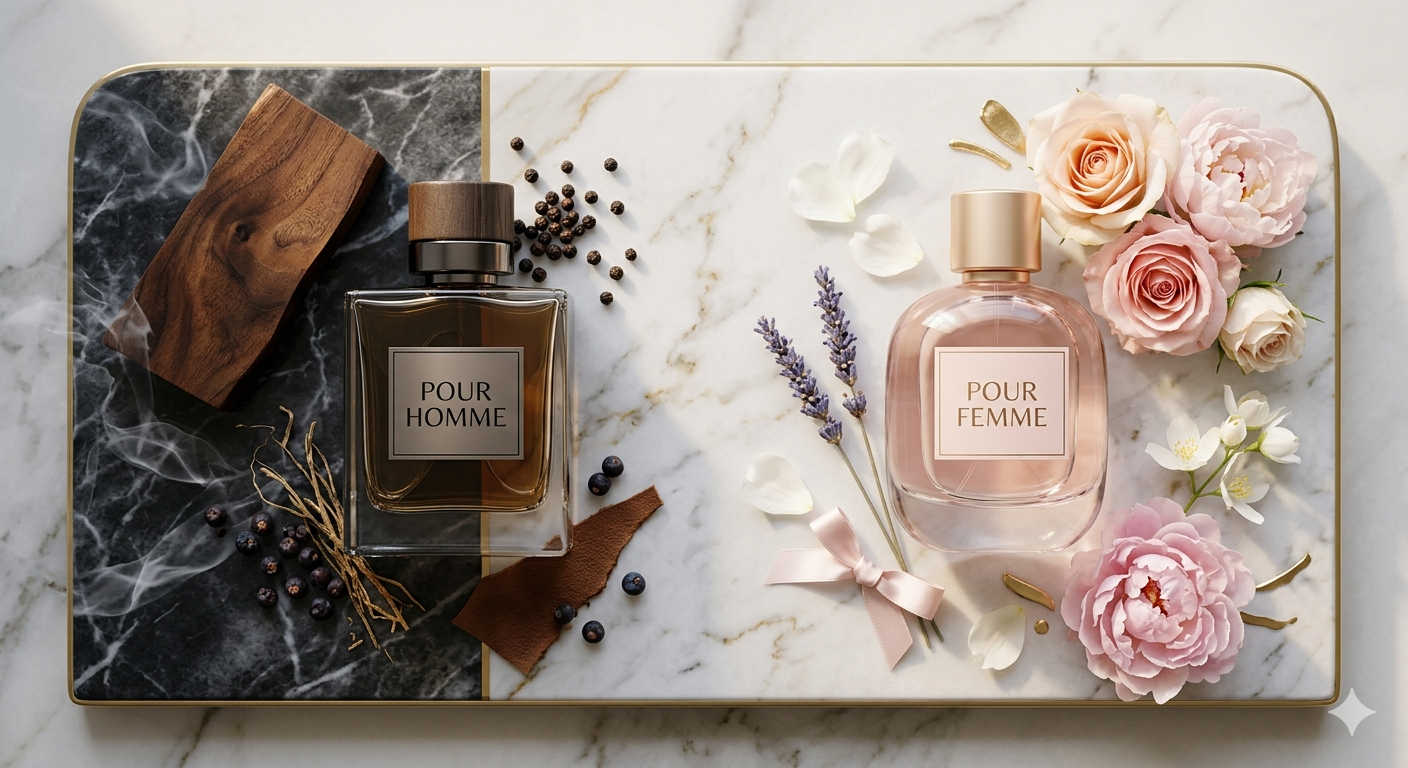
When you step into the world of perfumes, one of the first distinctions you’ll notice is the labeling: pour homme and pour femme. These French terms have been used for decades in the fragrance industry, shaping how people choose scents and how brands market them. But what do they really mean—and more importantly, should they define your choice?
This comprehensive guide breaks down everything you need to know about pour homme vs pour femme, including scent profiles, composition, myths, buying tips, and the growing shift toward gender-neutral fragrances. If you’re trying to choose the perfect perfume or simply understand the difference, this article will give you clarity and practical direction.
What Does Pour Homme and Pour Femme Mean?
The phrases come from French, the historical language of perfumery:
- Pour Homme means for men
- Pour Femme means for women
These labels are used to categorize fragrances based on traditional gender preferences. However, it’s important to recognize that these categories are largely shaped by marketing, not strict rules of chemistry or biology.
In reality, fragrance is a blend of aromatic compounds that interact uniquely with each person’s skin. The idea that a scent is strictly “male” or “female” is more cultural than scientific.
Why Fragrances Are Gendered
To understand the difference between pour homme and pour femme, you need to look at how the fragrance industry evolved.
In earlier centuries, scents were not divided by gender. Both men and women wore similar blends—often rich in florals, spices, and resins. It wasn’t until the 20th century that brands began separating fragrances to target specific audiences.
This shift was driven by:
- Advertising strategies
- Consumer psychology
- Cultural norms around masculinity and femininity
Over time, people began associating certain smells with gender identity. These associations still influence buying decisions today.
The Structure of a Perfume
Before comparing scent types, it helps to understand how perfumes are constructed. Every fragrance typically has three layers, known as notes:
Top Notes (First Impression)
These are the scents you smell immediately after applying perfume. They are light, fresh, and evaporate quickly.
Examples:
- Citrus (lemon, bergamot, orange)
- Light herbs
- Fruity notes
Heart Notes (Core of the Fragrance)
These emerge after the top notes fade and define the main character of the scent.
Examples:
- Floral notes like rose and jasmine
- Spices such as cinnamon or cardamom
- Green or herbal tones
Base Notes (Lasting Depth)
These are the richest and longest-lasting components. They anchor the fragrance.
Examples:
- Woods (sandalwood, cedarwood)
- Musk
- Amber
- Vanilla
The combination and balance of these layers determine whether a fragrance is marketed as pour homme or pour femme.
Key Differences Between Pour Homme and Pour Femme
Pour Homme Fragrances
Traditionally, pour homme perfumes are designed to evoke strength, freshness, and subtle intensity.
Common characteristics:
- Woody and earthy tones
- Aromatic herbs
- Spicy accents
- Clean, fresh finishes
Popular notes:
- Vetiver
- Cedarwood
- Sandalwood
- Lavender
- Black pepper
These fragrances are often described as crisp, bold, or refined.
Pour Femme Fragrances
Pour femme fragrances are typically designed to feel expressive, soft, or elegant.
Common characteristics:
- Floral dominance
- Sweet or fruity notes
- Creamy or powdery textures
- Warm and inviting base
Popular notes:
- Rose
- Jasmine
- Vanilla
- Peach
- Caramel
These scents are often labeled as romantic, delicate, or luxurious.
Are These Differences Real?
Not entirely.
The truth is that fragrance ingredients themselves are not gendered. A rose smells like a rose, regardless of who wears it. A woody scent can feel powerful on anyone.
The distinction comes from long-standing cultural patterns:
- Floral = feminine
- Woody = masculine
- Sweet = feminine
- Spicy = masculine
These associations are learned, not inherent.
The Rise of Unisex Fragrances
In recent years, there has been a significant shift toward unisex or gender-neutral perfumes. These fragrances are designed without a specific gender label and focus purely on scent composition.
Unisex fragrances often combine elements from both traditional categories, such as:
- Floral + woody
- Citrus + musk
- Sweet + smoky
This approach allows for more creativity and gives users the freedom to choose based on personal preference rather than labels.
How Skin Chemistry Changes a Fragrance
One of the most important factors when choosing a perfume is how it reacts with your skin.
A fragrance can smell completely different depending on:
- Skin type (oily or dry)
- Body temperature
- Natural body chemistry
- Diet and environment
For example:
- A sweet perfume may become deeper and richer on one person
- A woody fragrance may smell softer or slightly sweet on another
This is why testing a fragrance on your own skin is essential before buying.
How to Choose the Right Fragrance
Instead of focusing only on pour homme or pour femme, consider these practical factors:
1. Your Personal Taste
Do you prefer fresh, sweet, spicy, or woody scents?
2. Occasion
- Daytime: lighter, refreshing scents
- Evening: deeper, more intense fragrances
3. Climate
- Hot weather: citrus, aquatic, and light floral scents
- Cold weather: amber, vanilla, and spicy fragrances
4. Longevity
- Eau de Toilette: lighter, shorter-lasting
- Eau de Parfum: stronger, longer-lasting
5. Test Before Buying
Apply the fragrance and wait a few hours to experience all layers.
Recommended Pour Homme Fragrances
If you’re exploring traditional masculine scents, here are some widely appreciated options:
- Dior Sauvage Eau de Toilette – Fresh, spicy, and versatile for daily wear
- Bleu de Chanel Eau de Parfum – A balanced woody-aromatic fragrance with depth
- Acqua di Gio by Giorgio Armani – Light, aquatic, and perfect for warm climates
- Versace Eros Eau de Toilette – Sweet, bold, and youthful
These fragrances are popular for their versatility and strong performance.
Recommended Pour Femme Fragrances
For those who enjoy traditionally feminine scents, consider:
- Chanel Coco Mademoiselle Eau de Parfum – Elegant, citrusy, and slightly sweet
- Yves Saint Laurent Black Opium – Warm, sweet, and slightly spicy
- Lancôme La Vie Est Belle – Rich, sweet, and long-lasting
- Gucci Bloom Eau de Parfum – Floral and natural
These are well-loved for their expressive and memorable scent profiles.
Best Unisex Fragrance Recommendations
If you want something beyond gender labels, try these:
- CK One by Calvin Klein – Clean, citrusy, and timeless
- Tom Ford Black Orchid – Deep, luxurious, and bold
- Maison Francis Kurkdjian Baccarat Rouge 540 – Sweet, woody, and highly distinctive
- Le Labo Santal 33 – Woody, smoky, and modern
Unisex fragrances are ideal if you want something unique and less conventional.
Common Myths About Pour Homme and Pour Femme
Myth 1: Men Can’t Wear Floral Scents
Floral notes are present in many men’s fragrances. It’s all about balance.
Myth 2: Women Should Avoid Strong or Woody Scents
Woody fragrances can feel sophisticated and empowering on anyone.
Myth 3: Unisex Fragrances Are Boring
Many unisex perfumes are complex and high-quality.
Myth 4: Expensive Means Better
Price doesn’t always reflect quality. Many affordable perfumes perform well.
How to Make Your Fragrance Last Longer
To get the most out of your perfume:
- Apply to pulse points (wrists, neck, behind ears)
- Moisturize skin before applying
- Avoid rubbing the fragrance
- Store perfume in a cool, dark place
These small steps can significantly improve longevity.
Layering Fragrances for a Unique Scent
Layering allows you to create a personalized scent profile.
Examples:
- Citrus + vanilla for a fresh-sweet blend
- Floral + woody for depth and elegance
Start with lighter scents and build gradually.
Pour Homme vs Pour Femme: Which Should You Choose?
The answer is simple: choose what you like.
While labels can guide beginners, they shouldn’t limit your choices. The best fragrance is one that:
- Matches your personality
- Feels comfortable to wear
- Works well with your skin
Trust your senses rather than relying solely on marketing labels.
FAQs About Pour Homme vs Pour Femme
Can women wear pour homme fragrances?
Yes. There are no restrictions. Many women prefer woody or fresh scents.
Can men wear pour femme perfumes?
Absolutely. Fragrance is about preference, not rules.
What is the main difference between pour homme and pour femme?
The difference lies in scent style and marketing, not in the ingredients themselves.
Are unisex perfumes better?
Not necessarily better, but they offer more flexibility and creativity.
How do I know which fragrance suits me?
Test it on your skin and see how it develops over time.
Final Thoughts
The distinction between pour homme and pour femme is rooted in tradition and marketing rather than strict definitions. While these categories can help guide your choices, they shouldn’t restrict your exploration.
Fragrance is deeply personal. It evolves with your skin, reflects your mood, and leaves a lasting impression. Whether you choose a classic masculine scent, a soft floral perfume, or a bold unisex blend, the most important thing is that it resonates with you.
By understanding how fragrances work and letting go of rigid labels, you open yourself to a much richer and more enjoyable scent experience.