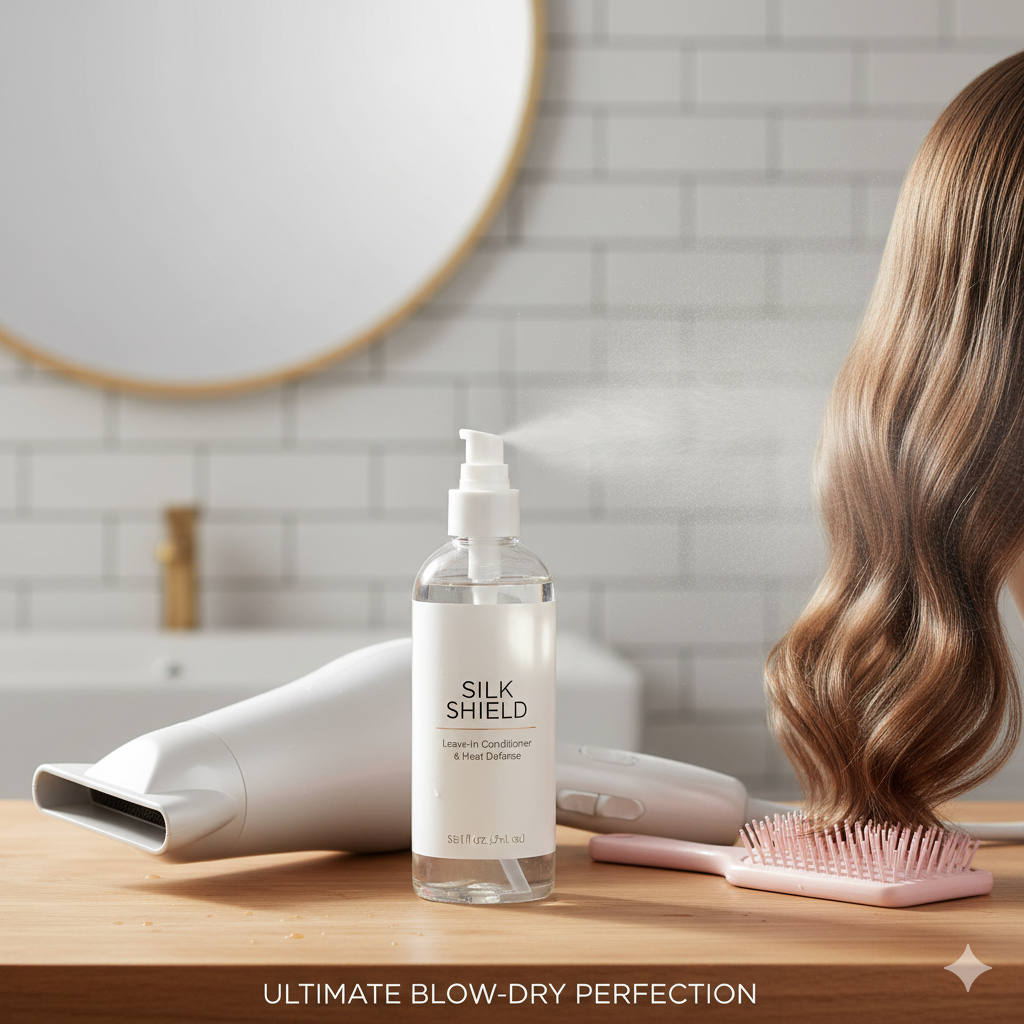
When you’re serious about hair health, blow-drying becomes more than a styling step—it’s one of the greatest sources of stress for your strands. Between high temperatures, cuticle lift, and moisture depletion, every round brush or diffuser session gambles with damage. That’s where a leave-in conditioner with built-in heat protection enters the picture. It functions not merely as a hydrating ritual, but as a shield—against heat, friction, and environmental harm.
In this guide, I’ll walk you through what heat damage entails, what makes leave-ins effective, how to choose them discerning-ly, and which stand-out products deliver best results. Think of this as your roadmap to smoother, stronger blow-outs, without sacrificing the gloss, bounce, or integrity of your hair.
What Happens to Hair under Heat & Why Leave-Ins Matter
Blow-drying dries hair, yes—but it does more than just extract water. High heat causes three interlinked forms of damage:
- Moisture loss. Hair holds moisture in two main forms: free water and bound water. Heat first drives off free water, then begins to weaken the bonds retaining bound water. When bound water escapes, fiber strength diminishes.
- Cuticle lifting and breakage. The outer cuticle scales are meant to lie flat like shingles; heat and rapid moisture evaporation force them open. Once lifted, surfaces are rough, vulnerable to friction, frizz, and split ends.
- Protein structural damage. Inside the cortex are keratin proteins. Excessive temperature can irreversibly denature them—leading to brittleness, breakage, and permanent texture change. Even exposures in the 130-160 °C range begin to harm hair if frequent enough.
Leave-in conditioners with heat protection help by:
- forming a thin, protective film over the hair shaft that slows heat transfer and reduces friction,
- smoothing cuticles so that they lie flatter, reducing breakage and enhancing shine,
- replenishing moisture and delivering nutrients, so that hair is less brittle before drying begins.
However, product alone won’t solve all problems. Technique, frequency, product formulation, and how you care for hair between washes all matter deeply to the outcome.
Key Criteria That Distinguish Outstanding Leave-Ins
When I assess a leave-in conditioner with heat protection, I look for these core elements—each one weighs heavily in whether a product delivers real benefit or just promises.
Heat protection capability
Effective leave-ins will clearly deliver on heat shield performance: the film formers or silicone derivatives must be substantial enough to buffer temperature, reduce cuticle lifting, and protect internal hair structure. A product that softens without offering thermal barrier simply won’t resist the structural stress of frequent blow-drying.
Conditioning and repair support
Beyond protection, the best leave-ins restore moisture, smooth texture, reduce frizz, and support hair strength. Ingredients such as hydrolyzed proteins or botanical extracts help reinforce strands. Emollients and oils play a role, smoothing surface irregularities for gloss and slip.
Texture, weight, and compatibility with hair type
The wrong weight (too heavy or too light) can undo all benefits. Fine hair overloaded with rich oils or heavy silicones can look limp. Coarse or textured hair requires more slip and moisture. Pick a formula whose texture suits your hair thickness, porosity, and styling frequency.
Ingredient philosophy & tolerability
Many consumers today evaluate leave-ins not just by performance but by what is inside—and what is left out. Some prefer silicone-free or paraben-free formulas; others accept traditional polymers because of their proven protective performance. Fragrance levels, allergen risks, and buildup potential are part of the trade-off. You must decide where you stand.
Real-world outcomes, not just claims
Labels can say “protects up to 450 °F” or “blow-dryer safe,” but what counts is how hair looks, feels, and holds up over time. Reviews, before-and-after photos, repeat usage, and consistency across different hair types are the strongest signals. If a product shows up repeatedly in expert reviews, perform well on multiple hair textures, and leaves users reporting less breakage and frizz, it’s far more trustworthy.
How to Use a Leave-In with Heat Protection for Best Blow-Dry Results
Even the most advanced formula won’t deliver if misused. Here’s a refined protocol:
- Wash and rinse-out conditioner
Begin with your usual shampoo and rinse-out conditioner. Remove excess water gently by squeezing and blotting hair with a towel—not rubbing aggressively. - Apply leave-in on damp hair
Towel-damp (not dripping) is ideal. Spray or smooth the leave-in from mid-lengths to ends; only apply lightly near roots unless the product is ultra lightweight. Use fingers or a wide-tooth comb to ensure even distribution. - Pre-dry or rough-dry
Use a blow-dryer on low to medium heat and low airflow to remove the bulk of moisture. Keep the tool moving, avoid concentrating heat in one zone. This reduces drying time and lowers cumulative thermal load. - Use finishing heat & style
Once hair is 80-90 percent dry, switch to a polished finish: medium heat, directional nozzle, proper brushes (round or paddle), section by section. Maintain a distance of roughly 2 inches from dryer to hair, limit passes. - Cool shot & seal
Use the dryer’s cool-air setting at the end to close cuticles and lock in shine. Optionally, apply a lightweight serum or oil to ends to seal any residual cuticle lifting. - Regular maintenance
Clarify hair occasionally to remove buildup (especially if using silicones), use deep conditioning treatments weekly or bi-weekly, limit hottest settings and overuse of heat tools, protect hair from sun and environmental stress.
Who Needs These Products Most and When
Not all hair types or styling habits demand the same level of protection. Here’s what to consider:
- If you blow-dry daily or every few days.
- If your hair is fine or color treated—these are most vulnerable to heat stress.
- If you use flat irons, curling wands, or hot brushes in addition to blow-drying.
- If you frequently style in humid or dry climates, or expose hair to sun/air pollution.
- If you wish to preserve gloss, reduce frizz, and extend the lifespan of color or smoothness.
If you only blow-dry occasionally, a basic heat protectant spray might suffice. But for frequent styling, a leave-in that also hydrates, nourishes, and shields offers far more long-term benefit.
Ingredients & What to Look for / Avoid
Below is a breakdown of the effective frameworks of ingredients, and what ingredients you may wish to avoid depending on your preferences.
Ingredients that deliver
- Silicones and silicone derivatives like dimethicone, amodimethicone, cyclomethicone—to smooth cuticles, resist heat, reduce friction.
- Polymers and film-formers, which coalesce under heat to form a protective layer.
- Hydrolyzed proteins or keratin peptides—support structural strength and reduce breakage.
- Lightweight natural oils and esters—argan oil, marula oil, esters that mimic silicone slip but with lighter feel.
- Humectants (panthenol, glycerin) in moderation—they help retain moisture but must balance so that heat doesn’t draw moisture from the inner fiber (hygroscopicity concerns).
Ingredients or traits you might avoid
- Heavy waxes, butters, or thick oils if you have fine or low-density hair—they can weigh hair down and interfere with blow-dry volume.
- Very high levels of fragrance or essential oils that can irritate sensitive scalp.
- Alcohols that dry hair overly rapidly (denature moisture) unless balanced with strong emollients.
- Formulas that leave heavy residue or buildup, making hair feel dull unless regularly clarified.
Top Recommended Products: Heat-Protecting Leave-Ins You Can Trust
Here are six leave-in conditioners that combine conditioning, protection, and high performance. Each caters to particular hair types, textures, or styling needs. These are among the best in the market today, offering both usability and protective power.
| Product | Best For | Strengths | Potential Trade-Offs / Considerations |
|---|---|---|---|
| OUAI Leave-In Conditioner & Heat Protectant Spray | All hair types, especially those seeking lightweight protection and high polish | Pleasant scent, spritz format spreads easily; the formula delivers excellent slip and detangling; very effective barrier when blow-drying, with smooth, shiny finish. | Sprays may require reapplication on coarse hair; fragrance may be noticeable for sensitive users. |
| Pureology Color Fanatic Multi-Tasking Leave-In Spray | Color-treated hair, medium-to-coarse textures | Offers many benefits: detangling, heat protection, UV shielding; often praised for helping preserve color vibrancy while allowing smooth blow-outs. | Mist format can feel light—fine hair may need less; may need more frequent touch-ups in high humidity. |
| Kérastase Nutritive / Thermique Leave-In | Fine to medium hair that dries quickly and needs polish without weight | Exceptional in smoothing, resisting frizz while keeping hair soft and bouncy; feels luxurious; blends proteins and light oils with performance film formers. | Price point is premium; rich formulas may build up over time if not clarified. |
| Drybar Hot Toddy Heat Protectant Mist | Blow-out lovers, those who value scent, polish & style hold | Mist format offers even application; gives gloss, strength, and smooth finish; adds shine without heavy residue. | May not be enough moisture for extremely dry or coarse hair on its own; may need additional moisturization. |
| Dae Hair Mirage Mist Leave-In Conditioner / Heat Protectant | Clean-beauty seekers, textured/coily hair types | Botanical rich; less reliance on heavy silicones; gives plenty of detangling slip; smells refined and feels weightless for many users. | Slight learning curve in how much to use; in extremely fine hair, even light leave-ins can weigh. |
| Olaplex No. 6 Bond Smoother (used as leave-in with heat protection) | Highly damaged hair, chemically treated, over-processed | Beyond smoothing, it helps with bond repair; protects ends, controls frizz; when blow-dried, gives hair elasticity and resilience. | Rich cream-serum texture; heavy for fine hair; expensive; best used in smaller amounts. |
Comparative Guidance: Which Product for Which Situation
To help you decide, here are scenarios and which product may serve you best.
- Daily blow-dryer + long, fine hair: OUAI or Kérastase are likely your best bets. The lightweight mist or spray formulas protect without weighing down your strands or flattening volume.
- Color treated or highlighted hair: Pureology shows strength in protecting against color fade when heat is involved. Using a leave-in with UV and thermal protection helps maintain tone and shine.
- Curly, coily, or heavily textured hair: Dae Mirage Mist and Olaplex Bond Smoother both deliver moisture and smoothing while allowing texture to remain intact. Richer leave-ins may be needed at times, but these manage frizz and heat simultaneously.
- Frequent styling or harsh environmental exposure: Drybar Hot Toddy’s scent, polish and solid film protection make it a great choice—especially if you want both performance and aesthetic experience.
- Budget considerations balanced with performance: OUAI tends to deliver strong performance for its price; Dae and Pureology have slightly higher price points, but their combinations of ingredient quality and results often justify the investment.
Common Misconceptions & Clarifications
As an expert observer, I often see misunderstandings around heat protection and leave-in conditioners. Clearing these up will help you get realistic expectations.
- “If it says ‘protects up to 450°F’, that means you can safely use any tool at that temperature.” Not quite. That number often reflects lab tests under controlled conditions—not accounting for repeated exposure, close proximity, or tool misuse. Real safety comes from combining product protection with proper technique.
- “Silicones are bad.” Some consumers think all silicones damage hair. In truth, many silicones are excellent film formers that protect well under heat. The issue is buildup and weight. Used properly—and clarified occasionally—they can be powerful allies.
- “Natural oils alone can replace film-formers and heat protectants.” Oils provide gloss, lubrication, and some protection, but generally do not form heat-resistant films unless specially modified. Relying only on oils means you forgo significant buffering that more advanced ingredients provide.
- “More product = better protection.” Too much leave-in—especially richer ones—can lead to buildup, limp styling, greasy roots. Test quantity carefully. Often a light mist or small palm-size amount is enough for many hair types.
Putting Everything Together: Your Routine Blueprint
Here’s how to build a consistent, sustainable hair-care and styling routine that fully leverages a leave-in with heat protection.
- Clarification cycle
Once every 2-4 weeks (depending on product use and environment) use a gentle clarifying shampoo to remove buildup—especially if you use silicones, sprays, serums. - Weekly or bi-weekly deep conditioning
Use a mask or deep conditioner without rinse-outs that includes proteins, shea or similar butters, to repair internal damage and replenish moisture. Then on your regular wash-days, use your chosen leave-in + heat protectant. - Styling workflow
- Wash → gentle towel blot.
- Apply leave-in while hair is damp.
- Rough-dry on low / medium to 70-80 percent.
- Style and finish with medium heat, proper brush, directional drying.
- Cool shot to seal.
- Protect between washes
When at risk of environmental damage (sun exposure, wind, salt water, chlorine), wear protective styles, hats, or use light protective sprays in addition to leave-in. - Monitor and adjust
Pay attention to your hair’s response: breakage, dryness, limpness. If ends still feel brittle, consider richer formulas; if volume is lost or hair feels heavy, scale back or switch to mist/light spray formulas at times.
Style Tips: Maximizing Gloss, Smoothness, and Healthy Finish
- Always use a nozzle attachment on your blow-dryer to concentrate airflow and reduce unpredictable heat exposure.
- Dry sections in small segments with a round brush for shine and smooth curvature; paddle brushes help with straight styles.
- Finish with a shine-enhancing serum or a feather-light oil on ends only, to tame any residual flyaways or end texture.
- In humid climates, look for leave-ins that explicitly address humidity and contain anti-frizz polymers—these reduce moisture absorption that causes puffing up.
What to Prioritize in Your Next Purchase
When you go product shopping, lean into this checklist:
- Product clearly marketed as both leave-in conditioner and heat protectant—not just “styling spray” or “anti-frizz mist.”
- Transparent ingredient list: polymers/silicones or their alternatives, proteins, oils.
- Weight or texture suited to your hair type—sprays for fine/light, creams or richer serums for coarser or dry.
- Sensory profile (scent, after-feel) that you’re comfortable with.
- Brand reputation and user review consensus—people often report whether hair feels less damaged, smoother, more resilient.
- Price vs performance: sometimes paying more gets you better formulation, but sometimes mid-tier delivers excellent results if you apply properly.
Summary
Blow-drying doesn’t have to be an act of compromise. With a finely crafted leave-in conditioner that offers genuine heat protection, you can retain moisture, smooth the cuticle, cut down breakage, and maintain shine—while still achieving your desired volume or sleekness.
The products that rise to the top—OUAI, Pureology, Kérastase, Drybar, Dae, Olaplex—deliver combinations of film-forming protection, conditioning, and user sensuality. The best results come when product formulation aligns with hair texture and styling frequency, when application is thoughtful, and when you maintain hair between blow-dry sessions.
If you make protection part of your ritual, paying attention to ingredients and technique, your hair can be both styled and strong, glossy and resilient. Style smart, choose wisely, and let heat protection be your daily armor.